
Quick Answer: A mid-range interior design project in India typically costs between ₹1,800 and ₹3,500 per square foot, depending on the city, the scope of work, and the materials chosen. For a standard 1,000-square-foot 2BHK apartment, this usually works out to somewhere between ₹18 lakh and ₹35 lakh for a complete interior fit-out, including modular furniture, false ceilings, electrical work, painting, and soft furnishings.
That’s the number most homeowners search for — but the real answer depends on several moving parts, which is why two “mid-range” projects can look completely different on paper. This guide breaks down what actually goes into that number, how it changes by city and home size, and what factors push it up or down.
What Does “Mid-Range” Interior Design Actually Mean?
In the Indian interior design industry, projects are broadly grouped into three tiers:
- Budget/Basic — Focuses on functional essentials: modular kitchens, wardrobes, and minimal false ceiling work, usually with laminate finishes and standard hardware.
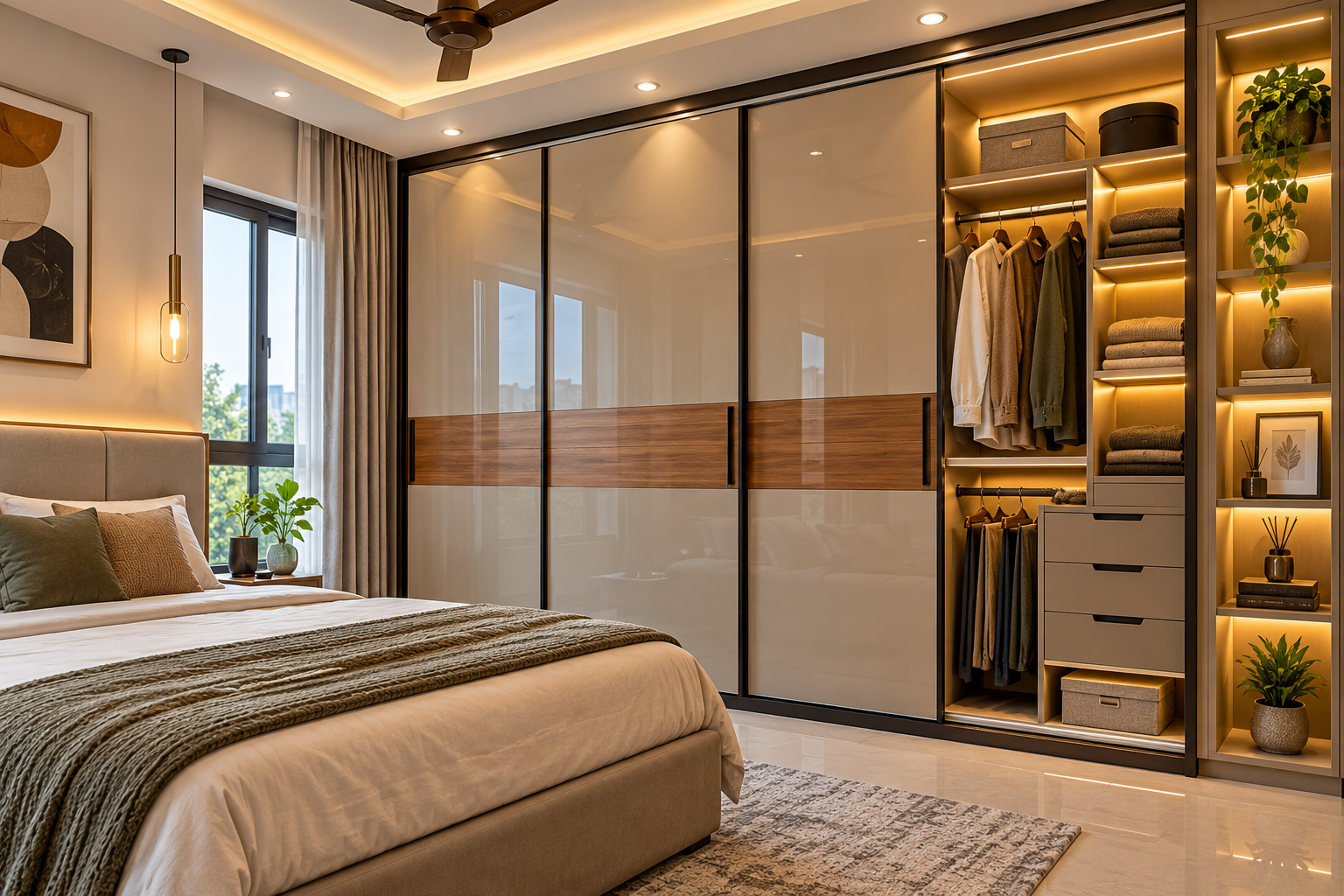
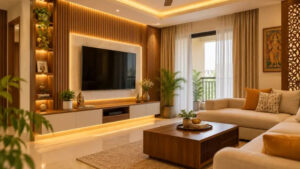
- Mid-Range — Adds design detail: custom modular units, better quality plywood and laminates, layered lighting, curated color palettes, and some designer furniture pieces alongside made-to-order items.
- Premium/Luxury — Involves high-end materials (veneers, natural stone, imported fittings), bespoke furniture, smart-home integration, and extensive customization.
Mid-range is where most urban Indian homeowners land — it balances aesthetics, durability, and budget without the premium markup of luxury finishes.
Average Cost Breakdown by Home Size
Since every home has a different layout, it helps to think about cost in terms of typical apartment sizes rather than a single flat number.
1 BHK homes (roughly 500–650 sq ft) typically fall in the ₹9–₹18 lakh range for a full mid-range interior. This usually covers a compact modular kitchen, one wardrobe unit, a TV/storage unit for the living area, false ceiling with basic lighting, and painting across the home.
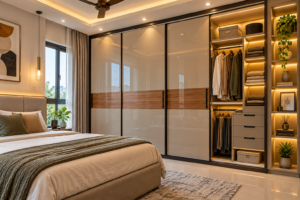
2 BHK homes (roughly 900–1,100 sq ft) are the most common project size and generally cost between ₹18–₹35 lakh. At this size, you’re usually adding a second wardrobe, a dedicated dining unit, more detailed false ceiling and lighting design, and often a study or utility unit as well.
3 BHK homes (roughly 1,300–1,700 sq ft) tend to range from ₹28–₹50 lakh. With an extra bedroom and often a larger living/dining footprint, costs rise mainly because of the additional wardrobes, furniture pieces, and the extended false ceiling and electrical work across a bigger carpet area.
4 BHK and duplex homes (2,000 sq ft and above) generally start from ₹45 lakh and can go higher depending on how many rooms are customized and whether the design includes staircases, home offices, or entertainment areas that need their own detailing.
These figures cover full-home interiors — kitchen, wardrobes, living and dining units, bedroom furniture, false ceilings, painting, and basic electrical/plumbing modifications. Costs shift significantly if you’re designing only specific rooms (like a kitchen or a single bedroom) rather than the entire home.
Key Factors That Influence the Cost
Several variables decide where your project lands within the mid-range bracket:
- Carpet area — Larger homes naturally cost more, though the per-square-foot rate can dip slightly with scale.
- Material selection — Plywood grade (BWP vs. MR), laminate brand, and hardware (soft-close hinges, channels) all affect pricing.
- Scope of civil work — False ceilings, flooring changes, or structural modifications add to the base cost.
- Number of rooms customized — Full-home projects cost proportionally less per room than isolated single-room makeovers.
- Design complexity — Curved ceilings, accent walls, and custom joinery increase labor and material costs.
- City and local labor rates — Metro cities and satellite towns have different contractor and skilled-labor rates.
- Designer fees — Some firms charge a percentage of project cost, others a flat design fee or offer it bundled into execution.
Why Interior Design Costs Vary by City
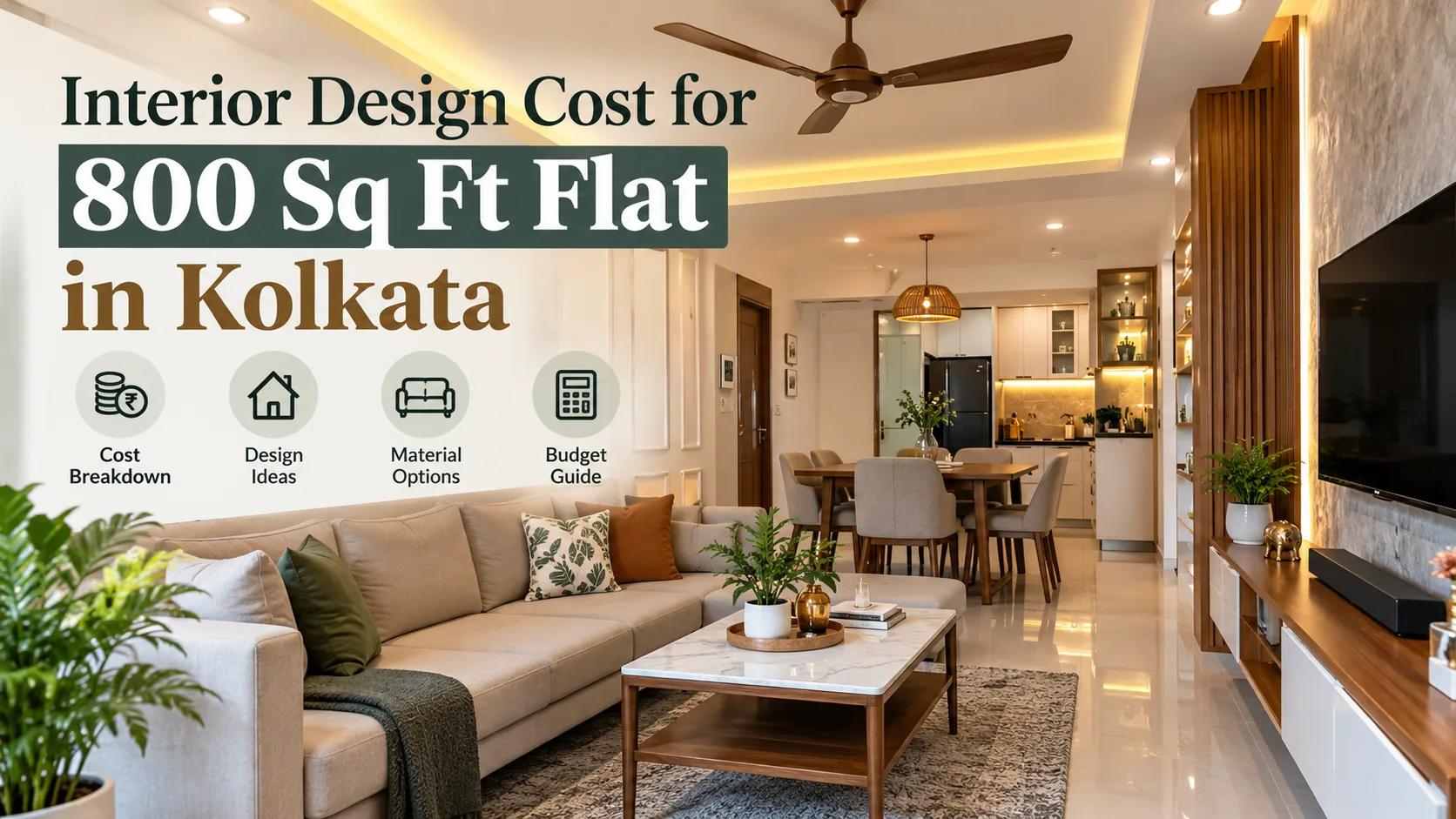
Labor rates, material transport costs, and market competition all shift interior design pricing from one city to another. Kolkata, for instance, generally offers more competitive mid-range pricing compared to Mumbai, Bengaluru, or Delhi NCR, largely due to lower labor costs and a strong base of local skilled carpenters and vendors. That said, the “mid-range” quality bar — design detailing, material grade, and finish — stays consistent; homeowners in Kolkata often get comparable design quality at a relatively lower per-square-foot rate than in India’s most expensive metros.
If you’re evaluating an interior designer in Kolkata, it’s worth comparing quotes carefully — the per-square-foot rate alone doesn’t tell you what’s included. Two quotes at the same headline price can differ hugely in material grade, warranty terms, and after-project support.
How to Get an Accurate Cost Estimate
Ballpark figures are useful for budgeting, but the only reliable way to know what your specific project will cost is a detailed, room-by-room estimate based on your actual layout, material preferences, and site conditions. A good interior design service in Kolkata should walk you through:
- A detailed BOQ (Bill of Quantities) breaking down material and labor costs
- Clear separation between design fees and execution costs
- Transparency on brand/grade of plywood, laminate, and hardware used
- No hidden charges for “extra” work discovered mid-project
This is precisely why an upfront, transparent cost estimation process matters more than a single quoted number — it protects you from budget surprises later in the project.
Tips to Keep Mid-Range Interior Design Costs in Control
- Finalize your layout and material choices before work begins — mid-project changes are the biggest cost inflators.
- Prioritize spend on high-use areas (kitchen, wardrobes) over less-used spaces.
- Ask for phase-wise payment schedules tied to project milestones, not lump-sum upfront payments.
- Compare at least two to three detailed quotes, not just headline numbers.
- Factor in a 10–15% contingency buffer for unforeseen site conditions.
If your budget leans closer to the basic end, you don’t have to compromise on style. Check out our guide on Low Cost Home Interior Design Ideas for practical ways to get a polished look without the mid-range price tag.
Choosing the Right Partner for Your Project
Cost is only half the equation — execution quality, timelines, and after-sales support matter just as much. When shortlisting the best interior design company in Kolkata for a mid-range project, look beyond the quoted price to their portfolio, client reviews, warranty terms, and how clearly they explain their estimation process before work begins.
Espace N Design works with Kolkata homeowners to build detailed, transparent cost estimates before any work starts, so you know exactly what you’re paying for and why — no vague lump-sum numbers, no surprises mid-project.
Frequently Asked Questions
1. What is the average cost per square foot for interior design in India?
Mid-range interior design in India typically costs ₹1,800–₹3,500 per square foot, depending on the city, material choices, and scope of civil work involved.
2. Is ₹20 lakh enough for a 2BHK interior design project?
Yes, ₹20 lakh generally covers a full mid-range interior fit-out for a standard 900–1,000 sq ft 2BHK, including modular kitchen, wardrobes, false ceiling, and painting — though the exact scope should be confirmed against a detailed estimate.
3. What is included in a mid-range interior design package?
It usually includes modular kitchen and wardrobes, false ceiling and lighting design, painting, basic electrical work, and furniture for living, dining, and bedrooms — using better-grade materials than a budget package but without luxury finishes.
4. Does interior design cost more in Kolkata than in other metros?
No — Kolkata generally offers more competitive interior design pricing than Mumbai, Delhi NCR, or Bengaluru, mainly due to lower labor and vendor costs, while design quality remains comparable.
5. How can I get an accurate interior design quote for my home?
The most reliable way is to request a detailed, room-by-room BOQ-based estimate from a design firm after they’ve reviewed your layout and material preferences, rather than relying on generic per-square-foot averages.