

A garment shop is more than a place to display clothes. The right interior design can influence how customers enter, browse, interact with products and ultimately decide to make a purchase. In 2026, successful clothing stores are moving beyond simple racks and shelves toward well-planned retail environments that combine functionality, visual appeal and a memorable shopping experience.
Whether you are opening a boutique, upgrading an existing clothing store or planning a large garment showroom, the interior should reflect your brand while making the shopping journey comfortable. From smart space planning and attractive product displays to layered lighting and thoughtfully designed fitting rooms, every element has a role to play.
If you are looking for the best interior design company in Kolkata, choosing a team that understands both aesthetics and commercial space planning can help you create a garment store that looks attractive while working efficiently for customers and staff.
1. Create a Clear and Customer-Friendly Store Layout
One of the most important garment shop interior design ideas is to plan the customer journey before selecting furniture or decorative elements. Customers should be able to enter, understand the store layout and move naturally between different product categories.
Avoid filling every available area with racks. A crowded store can make products difficult to browse and reduce the sense of space. Instead, create clear circulation paths and strategically position display units so customers can comfortably explore the collection.
For smaller stores, wall-mounted racks, vertical shelving and multifunctional furniture can increase display capacity without making the floor look congested. Flexible fixtures can also make it easier to refresh the store when new collections arrive.
2. Design an Eye-Catching Entrance and Front Display
The storefront is often the first interaction a potential customer has with your brand. A well-designed entrance should immediately communicate the store’s personality and product positioning.
Use mannequins, seasonal collections, attractive graphics and focused lighting to create a strong visual merchandising display. The entrance should look inviting rather than overloaded.
For premium boutiques, minimalist materials, clean lines and carefully selected displays can create a sophisticated first impression. For ethnic or traditional garment stores, materials, colours and decorative elements inspired by Indian craftsmanship can introduce a distinctive identity.
3. Use Layered Lighting to Highlight Clothing
Lighting is one of the most effective tools in retail interior design. A garment shop should not depend on one uniform light source. Instead, combine ambient, accent and task lighting according to the function of each area.
General lighting keeps the store bright and comfortable, while track lights or spotlights can highlight mannequins, new collections and feature displays. Fitting rooms and mirrors require particularly careful lighting because customers need to see garment colours and details clearly.
In 2026, warmer and more sophisticated lighting schemes are increasingly being used to create inviting retail environments while keeping products visually prominent.
4. Make the Product Display Part of the Interior Design
A garment store should make it easy for shoppers to understand what is being offered. Instead of treating racks and shelves as purely functional furniture, make them part of the overall interior concept.
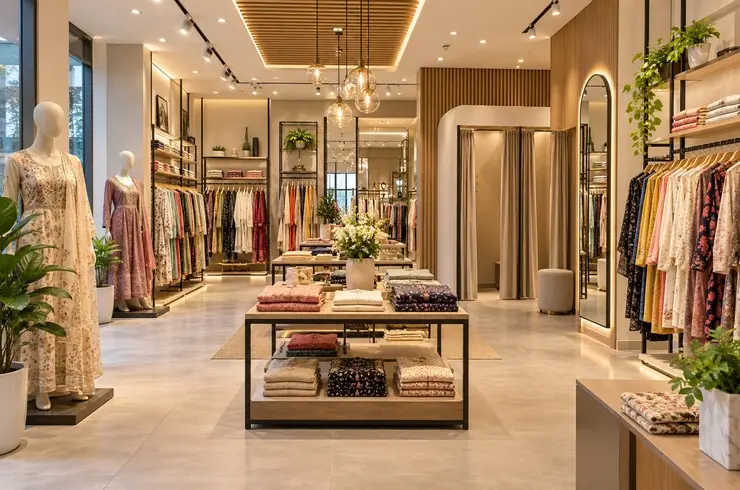
Use a combination of hanging rails, wall-mounted displays, folded garment tables, feature shelves and mannequins. Group products logically by category, colour, collection or occasion.
A feature wall can also become an important focal point. It can showcase the latest collection, brand logo or a carefully styled product arrangement. Leaving sufficient breathing space around key merchandise helps individual products receive more visual attention.
5. Give the Fitting Room Proper Attention
The fitting room is one of the most important areas of a clothing store because it is where customers interact directly with the products they are considering. Yet it is often treated as an afterthought.
A good fitting room should provide privacy, comfortable space, a full-length mirror, suitable lighting, seating or a small bench and convenient hooks for clothing and personal belongings.
For a premium appearance, consider textured wall finishes, curved partitions, elegant mirrors and warm lighting. The fitting room should feel like a natural extension of the main store rather than a separate utility area. Recent retail design guidance also highlights fitting rooms as a high-impact part of apparel store planning.
6. Choose Colours That Support Your Brand
Colour selection can significantly influence how customers perceive a garment store. The right palette should complement the clothing rather than compete with it.
Neutral shades such as beige, ivory, warm grey, white and natural wood can provide a sophisticated backdrop for colourful garments. Darker tones can create a dramatic premium look, while brighter colours may work well for youthful and contemporary fashion brands.
Instead of using too many colours throughout the store, choose a primary palette and introduce brand colours through signage, furniture, upholstery or decorative details.
7. Use Mirrors to Improve the Shopping Experience
Mirrors have both practical and visual benefits in clothing stores. Full-length mirrors allow customers to evaluate outfits, while strategically positioned mirrors can make a smaller shop appear more open.
Large mirrors can be incorporated near fitting rooms, display areas or key product zones. Statement mirrors with curved, arched or framed designs can also become decorative features.
However, avoid placing mirrors randomly. Their position should support the customer journey and provide useful viewing angles without creating visual clutter.
8. Add Smart Storage Without Compromising Style
Garment stores need substantial storage for different sizes, colours and collections. Poorly planned storage can quickly make a showroom look untidy.
Use a combination of concealed cabinets, under-display storage, overhead shelving and back-of-house storage. Keep frequently handled products easily accessible to staff while ensuring that excess inventory remains hidden from customers.
For compact shops, vertical storage is particularly useful. Floor-to-ceiling shelving can increase capacity while preserving valuable floor space for customer movement.
9. Incorporate Sustainable and Flexible Materials
Sustainability and adaptability are becoming increasingly relevant in retail interiors. In 2026, retailers are exploring materials and fixtures that are durable, visually appealing and easier to adapt as the brand evolves.
Natural wood finishes, low-impact materials, reusable display elements and modular furniture can help create a contemporary retail environment. Flexible fixtures are especially useful because product categories, seasonal campaigns and merchandising requirements can change throughout the year.
A sustainable approach does not mean compromising on style. Natural textures, plants, wood tones and earthy finishes can create a warm and premium shopping atmosphere.
10. Create a Strong Brand Experience
Modern garment store design is increasingly about creating an experience rather than simply providing shelves for merchandise. The interior should tell customers something about the brand before they speak to a salesperson.
Consider incorporating a distinctive logo wall, signature material, curated artwork, digital display, social-media-friendly corner or branded packaging area. Every element should feel connected to the brand identity.
The strongest retail interiors create consistency between the storefront, displays, lighting, furniture, signage and customer service areas. This helps customers remember the store and creates a stronger sense of brand value. Indian retail design is increasingly moving toward experience-led spaces where the physical environment becomes part of the brand story.
How to Design a Small Garment Shop in 2026
A small clothing store does not need a large budget or a huge floor area to look impressive. The key is efficient planning.
Start by identifying the most important zones: entrance, primary display, product storage, fitting room, billing counter and customer circulation. Use vertical displays instead of filling the centre with racks. Keep the colour palette simple and use mirrors and lighting to create visual depth.
A single strong feature wall can often create more impact than several decorative elements. Modular racks and movable display tables can also allow the store layout to change according to seasonal collections.
For a compact garment shop, every square foot should have a purpose—but the space should never feel overloaded.
Why Professional Retail Interior Design Matters
Designing a garment store involves more than choosing attractive furniture. A professional interior designer considers customer movement, merchandise visibility, lighting, storage, electrical requirements, branding, materials, budget and long-term usability.
Espace N Design approaches commercial interiors with a focus on practical planning, aesthetics and functionality. The company provides commercial interior design solutions and emphasizes concept visualization, quality materials, experienced execution and customized designs.
For retailers planning a new clothing showroom or renovation, working with an experienced best interior design company in Kolkata can make the process more organized and help transform a basic shop into a professional retail environment.
Final Thoughts
The best garment shop interior design ideas for 2026 focus on more than appearance. A successful clothing store should guide customers naturally, showcase products effectively, provide comfortable fitting spaces and communicate a clear brand identity.
Smart layouts, layered lighting, flexible displays, organized storage, carefully selected materials and strong visual merchandising can make a significant difference to the overall shopping experience.
Whether you are planning a compact boutique or a large garment showroom, the objective should be the same: create a space where customers feel comfortable exploring, trying and purchasing products. With thoughtful planning and professional execution, your garment store can become a visually attractive and commercially effective space that customers remember.