

A small jewellery shop may have limited floor space, but that does not mean it has to look ordinary. In fact, a thoughtfully planned interior can make a compact jewellery store feel spacious, elegant, trustworthy and premium. In 2026, the focus is shifting towards interiors that combine visual luxury with practical layouts, efficient storage, strategic lighting and a comfortable shopping experience.
The right design should do more than make the shop attractive. It should help customers notice the jewellery easily, move comfortably through the store and feel confident while making an important purchase. Current jewellery retail design trends increasingly emphasise clean layouts, carefully planned displays and lighting that enhances the appearance of metals and gemstones.
For business owners looking for a best interior design company in kolkata, planning the space around the customer’s journey is particularly important. A compact shop needs every element—from the entrance and display counters to the seating and storage—to serve a clear purpose. Here are some practical ideas to create a stylish and efficient jewellery store in 2026.
1. Choose a Minimalist Layout
When space is limited, a minimalist approach can make a significant difference. Avoid filling every available area with furniture, shelves or decorative elements. Too many visual elements can make a small showroom appear crowded and can distract customers from the jewellery.
Use clean lines, simple furniture and carefully positioned display units. A neutral background in shades such as ivory, beige, warm white or soft grey can make the interior feel larger while allowing gold, diamonds and coloured gemstones to become the visual focus.
A minimalist layout does not have to feel plain. Premium materials, subtle textures and carefully selected decorative features can provide sophistication without overwhelming the space.
2. Make the Most of Vertical Space
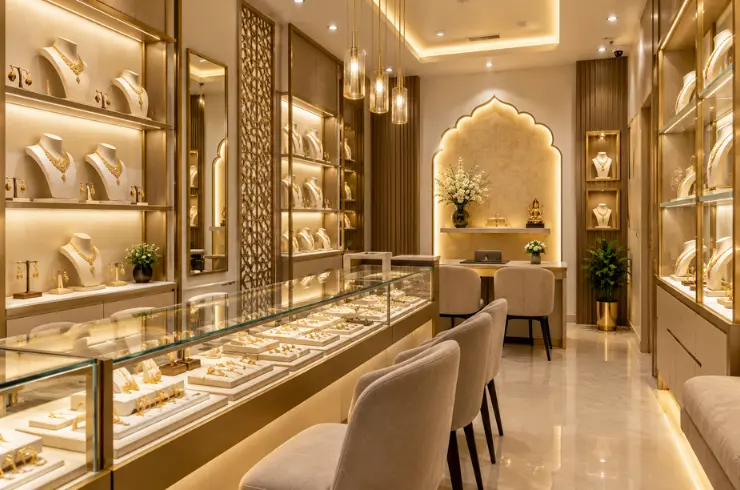
One of the most effective small jewellery shop interior design ideas is to use the walls intelligently. Instead of relying only on floor-standing furniture, install vertical display cabinets and wall-mounted showcases.
Tall glass cabinets can display necklaces, earrings, bangles and other collections while leaving valuable floor space available for customer movement. Vertical displays can also bring products closer to eye level, making it easier for shoppers to browse different collections.
Built-in wall cabinets can additionally provide concealed storage behind the display area. This approach keeps extra inventory, packaging and accessories organised without creating visible clutter.
3. Invest in High-Quality Display Counters
The jewellery display counter is one of the most important elements of a jewellery store interior. Instead of using oversized counters, consider slim, modular glass showcases that provide sufficient product visibility without consuming too much floor area.
Display different categories in dedicated sections. For example, one counter can focus on rings, another on bridal jewellery and another on everyday pieces. This creates a logical shopping journey and helps customers understand the collection more easily.
The display height should also allow customers and staff to interact comfortably. Secure glass, integrated locks and concealed storage can combine functionality with an elegant appearance.
4. Use Lighting as a Design Feature
Lighting can completely change how a jewellery store looks and how products are perceived. Poorly planned lighting may create glare, unwanted shadows or uneven illumination, while carefully positioned lighting can draw attention to individual pieces.
Use a combination of ambient lighting, accent lighting and integrated display lighting. LED strip lights inside cabinets can provide consistent illumination, while focused spotlights can highlight statement pieces.
The colour rendering of lighting is especially important because customers need to see the actual appearance of gold, diamonds and gemstones. Jewellery showroom designers increasingly treat lighting as an integral part of the display strategy rather than simply a source of general illumination.
5. Create a Warm and Premium Colour Palette
Colour selection can make a compact jewellery shop feel more luxurious without requiring an expensive interior.
For a timeless look, combine warm neutrals with metallic accents. Ivory, champagne, beige, taupe and warm white work particularly well as background colours. Gold or brass detailing can then introduce a subtle sense of luxury.
For a more contemporary jewellery boutique, charcoal, muted green, dusty rose or deep blue can be used as accent colours. The important point is to maintain balance. The interior should support the jewellery rather than compete with it.
6. Add Mirrors Strategically
Mirrors are useful in compact retail spaces because they can visually increase the sense of depth. A strategically positioned full-height mirror can make a narrow shop appear more open.
Mirrors can also be incorporated behind selected display sections, around consultation areas or within decorative wall panels. However, avoid placing reflective surfaces directly opposite strong spotlights, as excessive reflections can create glare and make displays difficult to view.
A combination of mirrors, glass and lighter wall finishes can create an airy appearance without physically increasing the size of the shop.
7. Design a Comfortable Consultation Area
Buying jewellery is often a considered decision rather than a quick transaction. Customers may want to compare designs, discuss budgets, examine gemstones or select jewellery for weddings and special occasions.
Even a small shop should therefore include a comfortable consultation area. A compact table with two or three comfortable chairs can be placed toward the rear or side of the store.
For a premium look, use upholstered seating, a small decorative wall and focused lighting. A semi-private consultation corner can also make customers feel more comfortable while discussing higher-value purchases.
8. Combine Traditional Indian Details with Modern Design
Indian jewellery has a strong connection with culture, weddings and craftsmanship. Your store interior can reflect that heritage without looking old-fashioned.
Consider incorporating subtle elements such as brass detailing, carved wood, jaali-inspired screens, arches, traditional motifs or handcrafted textures. Pair these features with modern glass displays, contemporary furniture and clean architectural lines.
This modern-traditional combination can give a jewellery boutique a distinctive identity while keeping the overall design relevant to today’s customers.
9. Plan Smart Storage
Storage is often overlooked when designing a small jewellery store. However, insufficient storage can quickly result in cluttered counters and an inefficient working environment.
Use drawers beneath display counters, tall storage cabinets and concealed compartments wherever possible. Staff should be able to access packaging, inventory and essential supplies without leaving the customer-facing area disorganised.
Smart storage is particularly valuable in smaller shops because it allows the visible showroom area to remain clean and focused on merchandise.
10. Keep Security Integrated into the Design
Jewellery stores need security, but security features should be incorporated into the design rather than appearing visually intrusive.
Display cases should provide appropriate protection, while CCTV placement, controlled access, secure storage and clear sightlines should be considered during the planning stage. Recent jewellery showroom design guidance also highlights the importance of integrating security into the floor plan rather than treating it as an afterthought.
A good layout allows staff to maintain visibility across important areas while customers can still enjoy a relaxed and welcoming environment.
11. Design an Attractive Entrance and Window Display
The entrance is the first opportunity to communicate your jewellery brand’s personality. In a small store, the frontage should be clean and uncluttered.
Use your best-selling or most visually distinctive jewellery in the window display rather than attempting to show everything at once. A focused display can create curiosity and encourage people passing by to enter.
The signage should also be clear and proportionate to the storefront. Premium finishes, warm illumination and a well-designed display can make even a modest shop look established and professional.
12. Focus on Customer Experience
Ultimately, successful jewellery shop interiors are designed around people rather than furniture. Customers should be able to enter easily, understand where different collections are displayed, sit comfortably and examine products without feeling rushed.
Leave sufficient circulation space between counters and avoid creating narrow pathways. Seating, lighting, acoustics, display height and privacy should all be considered together.
For a compact jewellery store, the goal is not simply to fit more products into the available area. The objective is to create a carefully organised environment where every square foot contributes to presentation, comfort, functionality or security.
Final Thoughts
The best small jewellery shop interiors balance space efficiency, luxury, functionality and customer comfort. In 2026, a successful compact jewellery store does not necessarily need an extravagant design. Instead, it needs a thoughtful layout, attractive displays, appropriate lighting, intelligent storage and a strong visual identity.
Whether you are opening a new boutique or renovating an existing jewellery store, begin with the customer journey and then build the interior around it. Use vertical space, keep the layout uncluttered, highlight jewellery with effective lighting and introduce premium details selectively.
Espace N Design can help transform a compact commercial space into a jewellery store that feels sophisticated, functional and aligned with the brand’s identity. A well-planned interior can make a small showroom feel considerably more valuable while creating an experience that customers remember.