




The right two colour combination for bedroom walls can completely change the character of your bedroom. Instead of making every wall the same shade, combining a dominant colour with a complementary or contrasting tone adds depth, balance and personality to the space.
In 2026, bedroom interiors are moving towards colours that feel warm, natural and calming while still making the room visually interesting. Soft greens, earthy neutrals, warm whites, muted blues, terracotta, lavender and deeper accent shades are becoming popular choices for contemporary bedrooms.
But choosing a beautiful colour pairing is only the beginning. The best bedroom wall colour combination should also work with your room size, natural light, furniture, flooring, curtains and overall interior style.
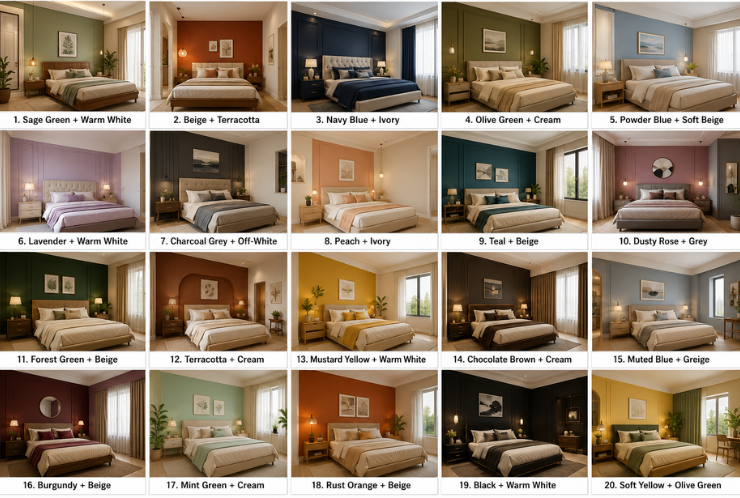
Here are 20 carefully selected two-colour combinations to help you create a stylish and comfortable bedroom in 2026.
What Is the Best Two Colour Combination for Bedroom Walls in 2026?
There is no single best combination for every bedroom. However, sage green and warm white, beige and terracotta, navy blue and ivory, olive green and cream, and muted blue and beige are among the most versatile choices for modern Indian bedrooms.
For a small bedroom, lighter combinations can make the space feel more open. Larger bedrooms can accommodate deeper accent colours without feeling enclosed.
The key is to choose one colour as the dominant shade and use the second colour strategically on an accent wall, behind the bed, in niches or through architectural details.
20 Best Two Colour Combination Ideas for Bedroom Walls
1. Sage Green and Warm White
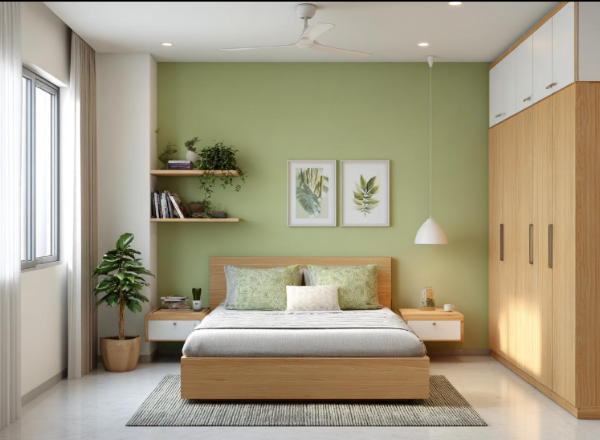
Sage green and warm white are ideal if you want a bedroom that feels calm, fresh and connected to nature.
Use sage green on the wall behind the bed and warm white on the remaining walls. The muted green creates a gentle focal point, while warm white prevents the room from feeling visually heavy.
Pair this bedroom colour combination with wooden furniture, linen curtains, cane details or indoor plants for a natural contemporary look.
Best for: Modern, Scandinavian and nature-inspired bedrooms.
2. Beige and Terracotta
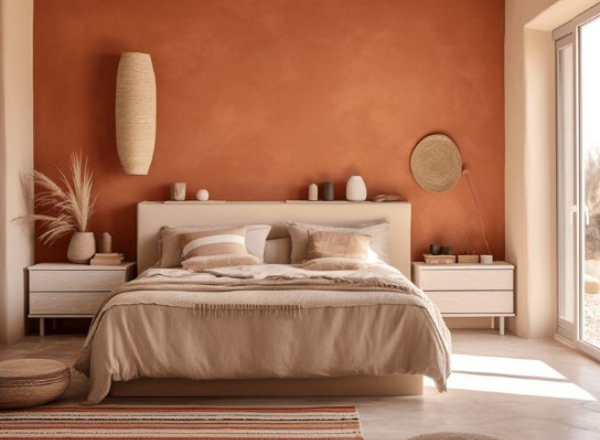
Beige and terracotta bring warmth and an earthy character to the bedroom.
Keep beige as the dominant shade and introduce terracotta on the headboard wall. This creates a cosy focal point without making the entire room feel dark.
Wooden furniture, neutral upholstery and warm lighting work particularly well with this combination.
Best for: Earthy, contemporary and Indian-inspired interiors.
3. Navy Blue and Ivory
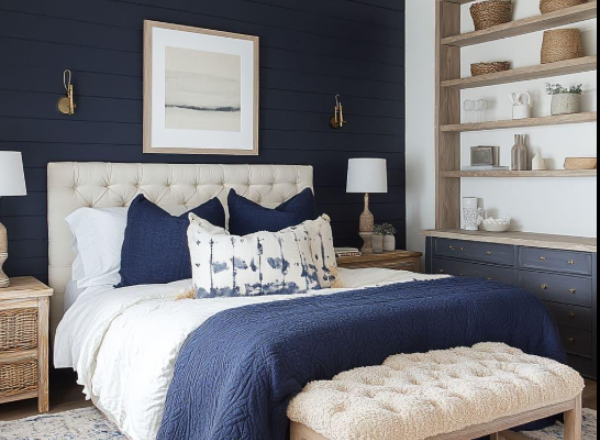
For homeowners who prefer a sophisticated bedroom, navy blue and ivory make a striking pair.
Navy blue works beautifully as an accent colour behind the bed, while ivory on the other walls keeps the room balanced and bright.
Add brass or gold-toned lighting and wooden furniture for a refined finish.
Best for: Luxury, contemporary and modern bedrooms.
4. Olive Green and Cream
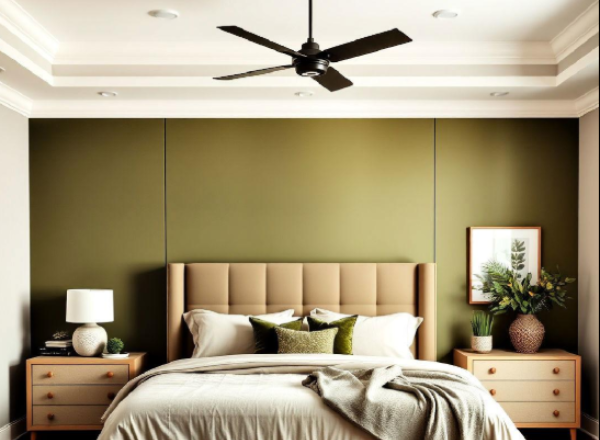
Olive green has a rich yet natural appearance, while cream softens its depth.
Use olive green on one feature wall and cream throughout the rest of the bedroom. The combination works especially well with wood, rattan, beige textiles and natural finishes.
It is an excellent choice when you want a room that feels sophisticated without being overly dramatic.
Best for: Modern, earthy and premium bedroom interiors.
5. Powder Blue and Soft Beige
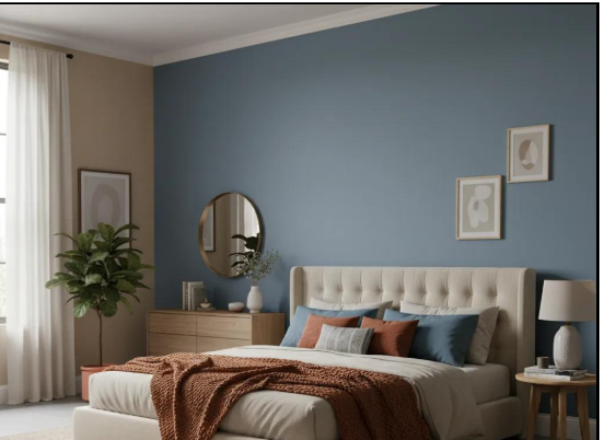
Powder blue creates a light and peaceful atmosphere, while soft beige adds warmth.
This is particularly useful when you want a relaxing bedroom without relying entirely on white.
Use blue behind the bed and beige on the remaining walls. Light wooden furniture and neutral fabrics can complete the look.
Best for: Small bedrooms, minimal interiors and calm spaces.
6. Lavender and Warm White
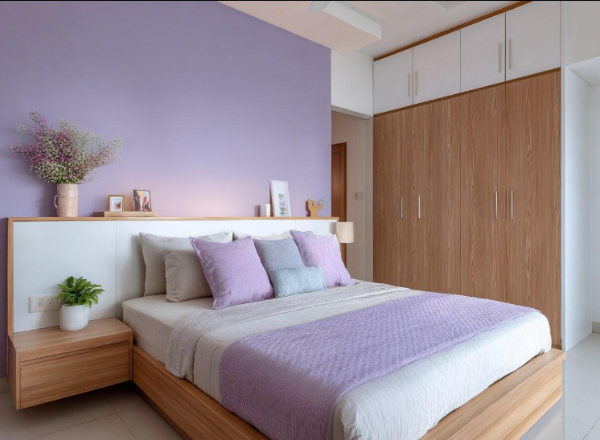
Lavender can introduce a subtle romantic quality without making the bedroom feel overly colourful.
Pair a muted lavender with warm white rather than a stark white. This creates a softer transition between the two shades.
For a more contemporary look, keep furniture simple and use lavender primarily as the accent colour.
Best for: Romantic, elegant and modern bedrooms.
7. Charcoal Grey and Off-White
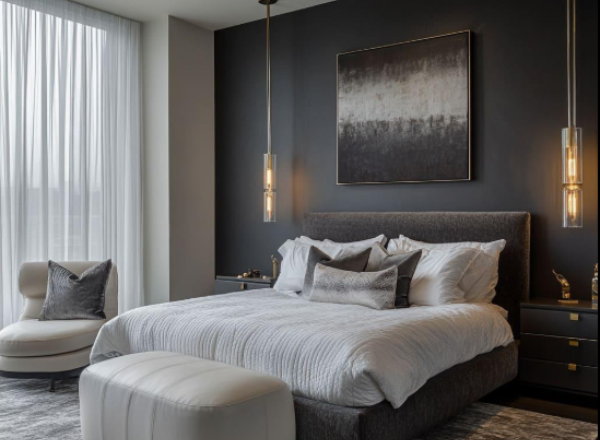
Charcoal grey creates depth and drama, while off-white keeps the overall room bright.
Rather than using charcoal on multiple walls, use it selectively on the headboard wall. Off-white can then balance the darker shade.
This room colour combination works especially well with black, walnut wood, metallic and neutral furniture.
Best for: Contemporary and sophisticated bedrooms.
8. Peach and Ivory
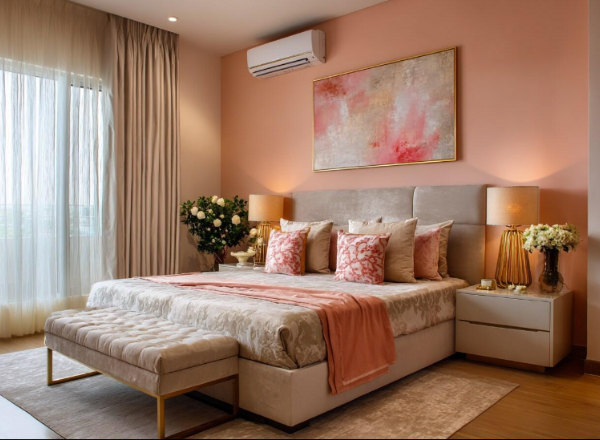
Peach and ivory are excellent for creating a warm and welcoming bedroom.
The soft peach shade adds personality without becoming overwhelming, while ivory maintains brightness.
This combination can work particularly well in bedrooms with warm lighting and light-coloured furniture.
Best for: Soft, cheerful and family bedrooms.
9. Teal and Beige
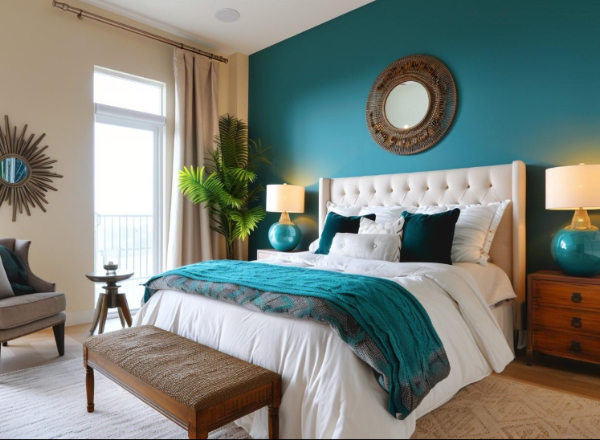
Teal gives the bedroom a rich focal point, while beige provides a neutral foundation.
Use teal behind the bed or on a single feature wall. Keep the rest of the walls beige to prevent the room from appearing too dark.
Add wooden furniture and neutral bedding to create a balanced palette.
Best for: Contemporary and statement bedrooms.
10. Dusty Rose and Grey
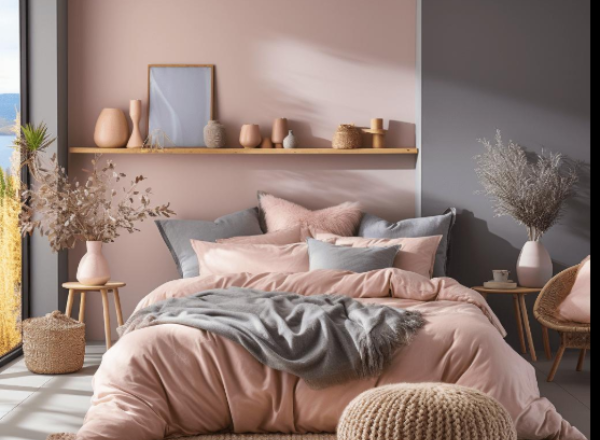
Dusty rose and grey offer a sophisticated alternative to brighter pinks.
The muted pink introduces warmth, while grey gives the room a contemporary foundation.
This combination is particularly effective when used with upholstered headboards, soft lighting and minimalist furniture.
Best for: Modern and elegant bedrooms.
11. Forest Green and Beige
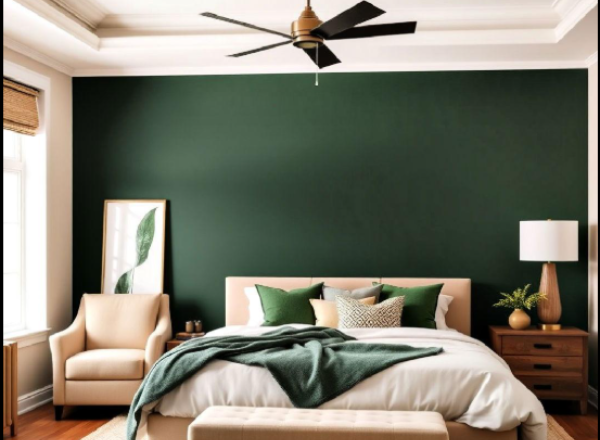
Forest green creates a dramatic connection with nature, while beige keeps the room comfortable and visually balanced.
Because forest green is a deeper colour, use it strategically rather than covering every wall.
A green accent wall behind the bed paired with beige walls can create a luxurious yet relaxing atmosphere.
Best for: Large bedrooms, luxury interiors and nature-inspired spaces.
12. Terracotta and Cream
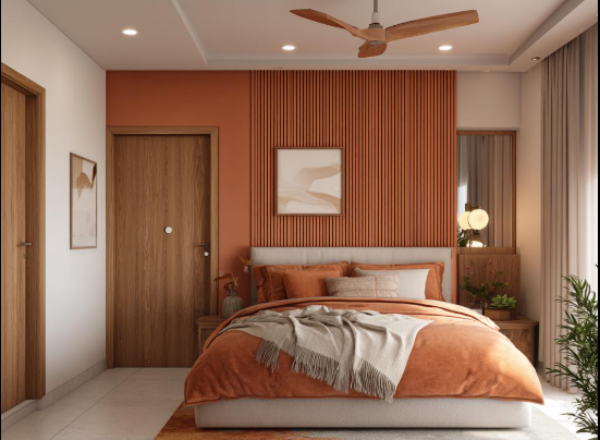
Terracotta is a warm, earthy shade that can make a bedroom feel intimate and inviting.
Cream provides the lighter counterbalance needed to prevent the colour palette from becoming too intense.
Introduce terracotta through the headboard wall and complement it with wood, woven textures and neutral fabrics.
Best for: Earthy, bohemian and contemporary bedrooms.
13. Mustard Yellow and Warm White
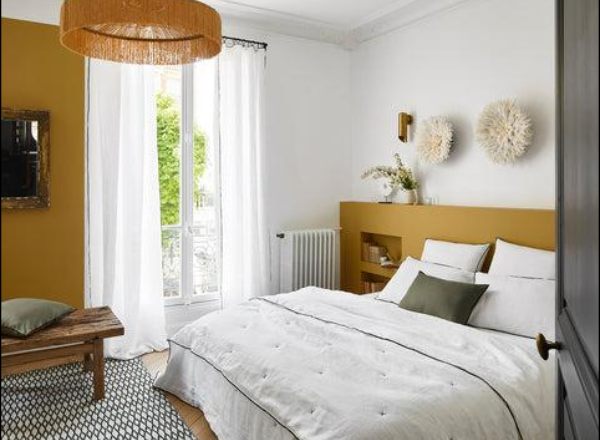
If you want a cheerful bedroom without using overly bright colours, mustard yellow can work beautifully as an accent.
Pair it with warm white and use mustard selectively on one wall or architectural detail.
The result is energetic but still sophisticated.
Best for: Contemporary, eclectic and youthful bedrooms.
14. Chocolate Brown and Cream
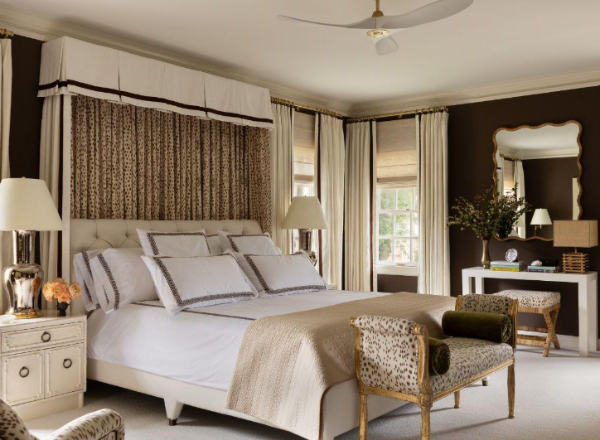
Chocolate brown and cream create a warm, grounded atmosphere.
Brown adds richness and depth, while cream prevents the room from feeling too dark.
This combination works particularly well with wooden wardrobes, warm lighting and neutral bedding.
Best for: Classic, luxurious and cosy bedrooms.
15. Muted Blue and Greige
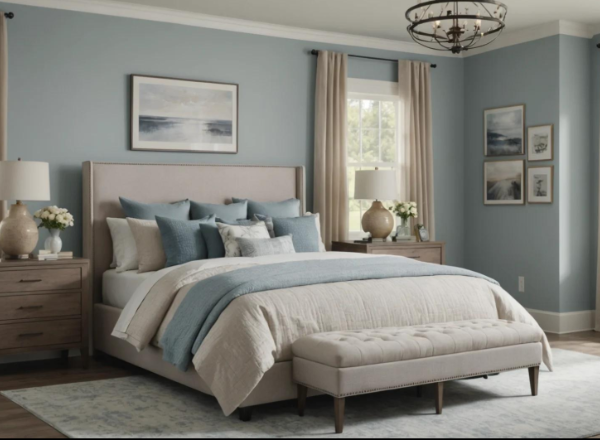
Greige—a combination of grey and beige—provides a sophisticated neutral background for muted blue.
This is an excellent choice for homeowners who want a contemporary room without strong contrasts.
Use muted blue behind the bed and greige on the remaining walls.
Best for: Minimalist and contemporary interiors.
16. Burgundy and Beige
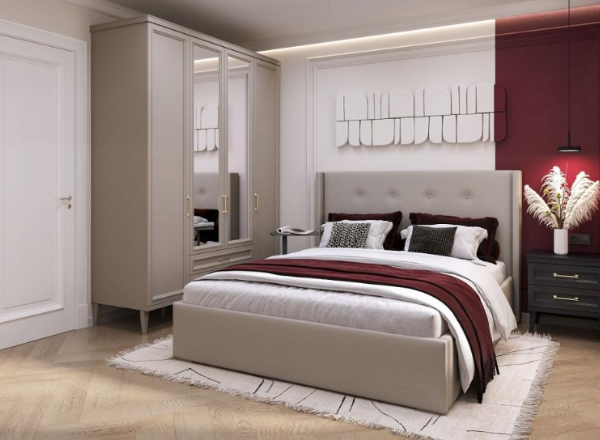
Burgundy can create a rich and dramatic bedroom when used carefully.
Instead of applying it to several walls, use burgundy as a feature shade behind the bed and beige throughout the rest of the room.
This combination works particularly well with warm lighting and wooden or metallic accents.
Best for: Luxury and dramatic bedroom interiors.
17. Mint Green and Cream
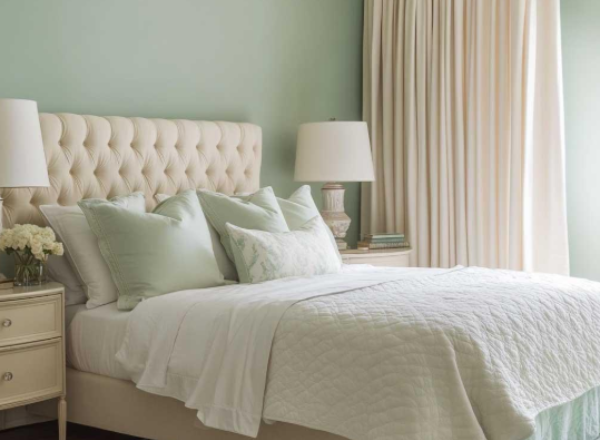
Mint green brings freshness, while cream adds warmth and softness.
It is a particularly useful bed room 2 colour idea for rooms where you want colour without sacrificing a bright and airy appearance.
Use mint green as the accent shade and cream as the dominant wall colour.
Best for: Small bedrooms, contemporary homes and fresh interiors.
18. Rust Orange and Beige
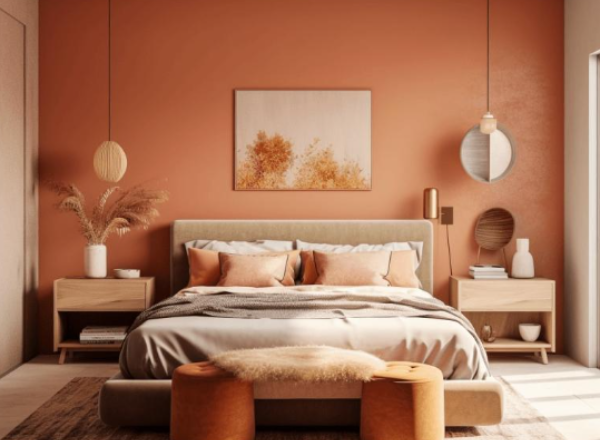
Rust orange adds warmth and personality without the intensity of a brighter orange.
When paired with beige, it becomes much easier to incorporate into an everyday bedroom.
Use rust on the headboard wall and beige elsewhere. Wooden furniture and neutral textiles can reinforce the earthy palette.
Best for: Modern Indian, rustic and earthy bedrooms.
19. Black and Warm White
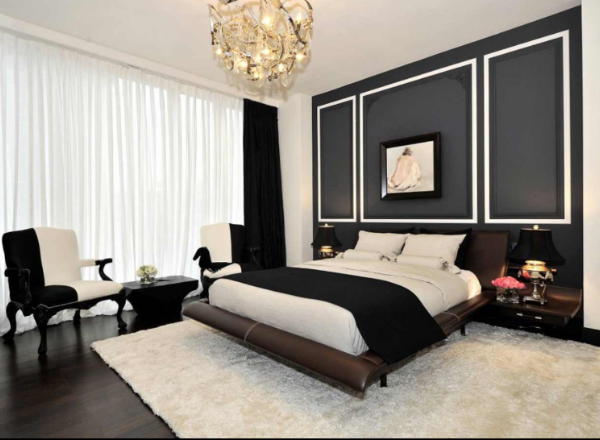
Black and warm white can create a dramatic modern bedroom when used in the right proportions.
Avoid covering large areas with black in a small or poorly lit room. Instead, use black as a feature shade around the headboard, niches or selected architectural elements.
Warm white keeps the remaining walls visually lighter.
Best for: Modern, minimalist and monochrome interiors.
20. Soft Yellow and Olive Green
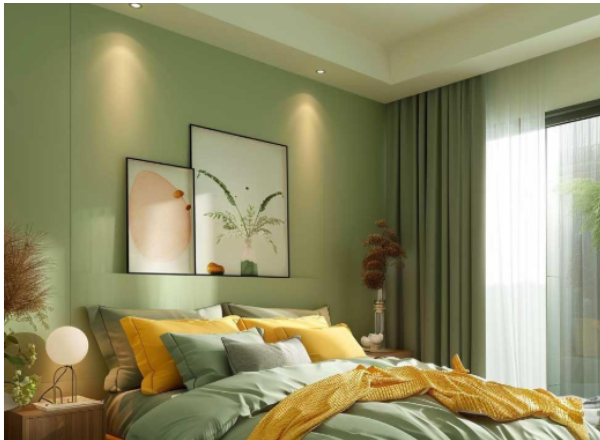
Soft yellow and olive green create a warm, nature-inspired atmosphere.
The yellow introduces brightness, while olive green grounds the palette.
This combination works especially well with natural wood, plants, woven accessories and warm lighting.
Best for: Eclectic, contemporary and nature-inspired bedrooms.
How to Choose the Right Bedroom Wall Colour Combination
Choosing colours from a trend list is not enough. The same combination can look completely different depending on the room.
Consider these factors before finalising your bedroom wall colour combination.
1. Consider the Amount of Natural Light
Natural light can significantly affect how a colour appears.
If your bedroom receives limited daylight, lighter shades such as warm white, cream, beige, soft blue and pastel green can help maintain an airy appearance.
A well-lit bedroom gives you more freedom to experiment with deeper shades such as navy, forest green, charcoal or burgundy.
2. Think About Bedroom Size
For compact bedrooms, use a lighter dominant colour and reserve the darker shade for one feature wall.
In larger bedrooms, deeper colours can be used more confidently without making the space feel enclosed.
3. Match the Colours With Your Furniture
Your walls should complement—not compete with—your furniture.
For example:
- Wooden furniture pairs well with olive, beige, cream and terracotta.
- White furniture works with pastel blue, lavender, sage and grey.
- Dark furniture can be balanced with ivory, cream, beige or warm white.
- Metallic accents work particularly well with navy, charcoal, burgundy and deep green.
4. Use the Bedhead Wall as the Accent Wall
The wall behind the bed is usually the natural focal point of a bedroom.
Using the deeper or more distinctive colour here can create visual hierarchy without overwhelming the entire room.
You can also combine paint with wall panelling, textured finishes, wallpaper or decorative lighting to make the feature wall more interesting.
5. Check Colours in Both Daylight and Artificial Light
A colour can look different in morning daylight, afternoon sunlight and warm artificial lighting.
Always test a small patch before painting the entire room. Observe it at different times of the day before making the final decision.
6. Consider the Mood You Want to Create
Your bedroom should support relaxation, so think about the atmosphere you want.
| Desired Mood | Suitable Colour Combinations |
| Calm | Sage & warm white |
| Cosy | Terracotta & cream |
| Elegant | Navy & ivory |
| Natural | Olive & beige |
| Romantic | Lavender & warm white |
| Luxurious | Burgundy & beige |
| Fresh | Mint & cream |
| Modern | Charcoal & off-white |
| Warm | Peach & ivory |
| Dramatic | Forest green & beige |
Should You Paint One Wall a Darker Colour?
Yes. A darker accent wall is one of the easiest ways to introduce depth into a two-colour bedroom design.
However, the darker shade does not always have to cover an entire wall. You can also use it for:
- The wall behind the bed
- Wall niches
- Decorative panels
- Built-in wardrobes
- Architectural sections
- A geometric paint design
For smaller bedrooms, keeping most walls light and using the darker shade selectively can prevent the space from feeling cramped.
How Many Colours Should a Bedroom Have?
A two-colour wall scheme does not mean the entire bedroom should contain only two colours.
A practical approach is to select:
1 dominant wall colour + 1 accent wall colour + complementary furniture and accessories.
For example, sage green and warm white can form the wall palette, while wood, beige textiles and muted green accessories provide additional visual layers.
The goal is not to restrict every element to two shades but to maintain a cohesive overall palette.
Two Colour Combination vs One Colour: Which Is Better?
A single wall colour creates a simple and consistent appearance, while a two-colour scheme adds contrast and visual depth.
Choose a two-colour design if you want to:
- Create a focal wall
- Make the bedroom look more layered
- Highlight the bed area
- Separate visual zones
- Add personality without redesigning the entire room
For minimalist interiors, however, two closely related shades can be more effective than two highly contrasting colours.
Common Mistakes to Avoid When Choosing Bedroom Wall Colours
Even a beautiful colour can look wrong when it is used without considering the room.
Using Too Many Dark Colours
Deep colours can create a luxurious atmosphere, but using them across several walls in a small bedroom may make the space feel enclosed.
Ignoring Existing Furniture
Always consider your bed, wardrobe, flooring and curtains before selecting the wall palette.
Choosing Colours Only From Online Images
Online images may be edited and displayed under different lighting conditions. Always test the actual shade in your room.
Making Every Wall an Accent
An accent colour works because it contrasts with a supporting colour. Using strong colours everywhere can remove that visual hierarchy.
Ignoring the Ceiling
A lighter ceiling can help maintain a sense of openness, particularly when the walls contain medium or deep shades.
Which Two Colour Combination Is Best for a Small Bedroom?
For a small bedroom, some of the safest choices are:
- Mint green and cream
- Sage green and warm white
- Powder blue and beige
- Lavender and warm white
- Peach and ivory
- Soft beige and white
Lighter combinations generally help maintain a more open visual appearance, while a carefully positioned accent wall can still add depth.
Which Two Colour Combination Is Best for a Luxury Bedroom?
For a premium bedroom, consider combinations such as:
- Navy blue and ivory
- Forest green and beige
- Burgundy and beige
- Charcoal grey and off-white
- Olive green and cream
The final luxury effect depends not only on colour but also on lighting, materials, furniture proportions, textures and detailing.
How an Interior Designer Can Help You Choose Bedroom Colours
Choosing colours becomes much easier when the palette is considered as part of the entire interior rather than as an isolated wall-paint decision.
An experienced Interior Design Company in Kolkata can evaluate the bedroom’s natural light, dimensions, furniture, flooring, ceiling height and overall design style before recommending a colour scheme.
This approach helps ensure that your wall colours work together with the rest of the bedroom rather than looking like a separate element.
From selecting the right accent wall to coordinating colours with wardrobes, headboards, lighting and soft furnishings, professional interior planning can create a much more cohesive result.
If you are planning a complete bedroom makeover, working with an Interior Design Company in Kolkata can also help you coordinate the colour palette with the overall design concept of your home.
Frequently Asked Questions
1. What are the best two colour combinations for bedroom walls in 2026?
Some versatile choices for 2026 include sage green and warm white, olive green and cream, navy blue and ivory, beige and terracotta, and muted blue with beige. The best combination depends on room size, natural light, furniture and preferred interior style.
2. Which colour combination is best for a small bedroom?
Light combinations such as mint green and cream, sage green and warm white, powder blue and beige, and lavender with warm white can work well in compact bedrooms. A darker shade can be used selectively as an accent.
3. Which colour is best for a bedroom according to interior design?
There is no universal best bedroom colour. Calm shades such as soft green, blue, beige, cream and muted earthy tones are generally versatile because they can create a relaxed atmosphere while working with different interior styles.
4. Which wall should be a different colour in a bedroom?
The wall behind the bed is usually the best choice for an accent colour because it naturally becomes the visual focal point. However, the ideal accent wall depends on the room’s layout, windows, doors and furniture arrangement.
5. Can I use dark colours in a small bedroom?
Yes, but use them strategically. A dark colour on one feature wall combined with lighter shades on the remaining walls can add depth without making the entire room feel enclosed.
6. What is the best room colour combination for a modern bedroom?
Modern bedrooms can work well with combinations such as charcoal and off-white, navy and ivory, sage green and warm white, olive and cream, or muted blue and greige.
7. Should the bedroom ceiling be the same colour as the walls?
It does not have to be. A lighter ceiling can make the room feel more open, particularly when the walls use medium or darker shades. In some design concepts, however, a coordinated ceiling colour can create a more immersive look.
Final Thoughts
The right two colour combination for bedroom walls should do more than follow a trend. It should complement your room’s natural light, dimensions, furniture and the atmosphere you want to create.
For 2026, combinations built around natural greens, warm neutrals, muted blues, earthy terracotta and sophisticated deeper accents offer plenty of flexibility for Indian homes.
Whether you prefer a calm sage-and-white bedroom, a luxurious navy-and-ivory space or a warm terracotta-and-cream palette, the most successful design comes from balancing colour with proportion, lighting, texture and furniture.
A well-planned bedroom wall colour combination can therefore become more than a paint choice—it can form the foundation of the entire bedroom interior.