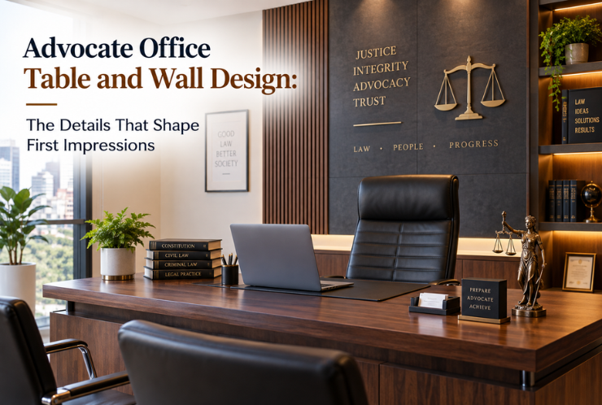
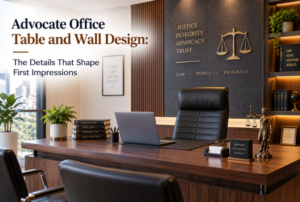
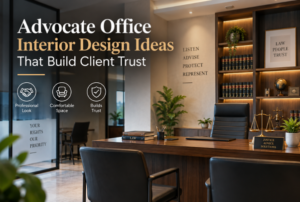
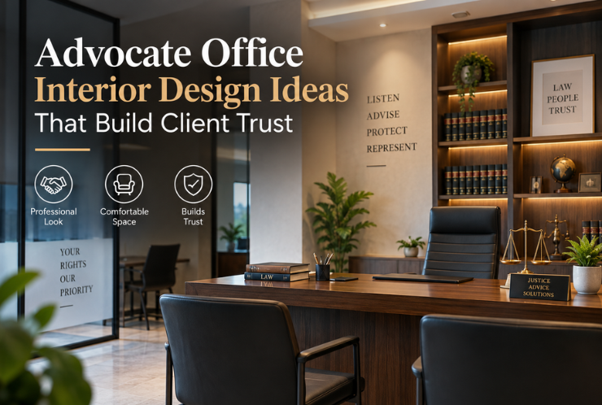
Advocate office interior design builds client trust when it does three things at once: signals professionalism, protects confidentiality, and puts an anxious client at ease within the first few minutes of arrival. The offices that get this right combine warm, credible materials with private consultation areas and a layout that never leaves a client feeling exposed.
Most people who walk into a lawyer’s office are already stressed, facing a property dispute, a criminal case, a divorce, or a business conflict that’s kept them up at night. Before your client even sits down, the space is already answering a question they haven’t asked out loud: can I trust this person with my problem?
Why Advocate Office Interior Design Directly Affects Client Trust
Interior design communicates before a single word is spoken. A Forbes Councils piece on interior design and customer experience points out that people process signals like color, lighting, and layout the moment they walk in, and those signals shape trust and comfort long before any conversation starts. For a law practice, that means the reception desk, the seating, even the sound level in the waiting area are all doing part of the persuasion work that legal expertise alone can’t do.
This is exactly why advocate office design can’t be an afterthought. It has to be planned with the same care as case strategy, because a client who feels uneasy in your space holds back information, quietly questions your competence, or simply doesn’t come back.
Reception Area: The First Argument You Make
Your reception area is the opening statement of your advocate office interior design, and it usually has to work harder than most practice owners expect.
A few things matter more than people realise:
- Seating that doesn’t feel institutional. Firm, upholstered chairs in a muted, warm palette read as considered rather than cheap, while plastic or overly casual furniture undercuts authority.
- A visible but restrained display of credentials, bar memberships, or notable case categories, arranged simply instead of as a cluttered wall.
- Acoustic separation from the working area. If a client can hear phone calls or discussions from the back office, confidentiality already feels compromised before the consultation even begins.
- Warm lighting instead of harsh fluorescent tubes, which tend to make waiting areas feel clinical rather than reassuring.
None of this has to be expensive. It has to be intentional, and that’s the difference most advocate office design projects miss.
Consultation Rooms That Actually Reassure Clients
If reception sets the tone, the consultation room is where trust gets confirmed or lost. This is arguably the most important space in any lawyer office interior design brief, since it’s where the most sensitive information gets shared.
A few things worth treating as non-negotiable:
- Full soundproofing, not partial. Glass partitions look modern, but glass alone rarely blocks sound well; pair it with acoustic panels or heavy fabric treatments, because privacy always matters in legal work.
- A round or oval table instead of a straight desk facing the client head-on. It softens the power dynamic without diminishing authority, and clients tend to open up more readily across a shared surface than an adversarial one.
- Closed storage for physical files. Locked cabinets kept in view, not necessarily accessible, quietly signal that document security is taken seriously.
- Comfortable but formal seating, avoiding anything too soft or too rigid. The goal is a client who feels at ease but still aware they’re in a professional setting.
Balancing Modern Law Office Interior Design With Traditional Authority
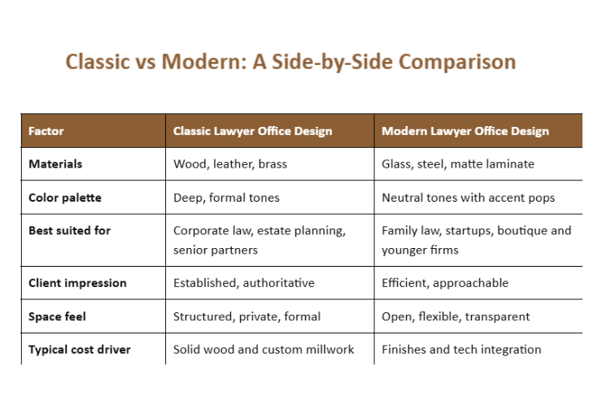
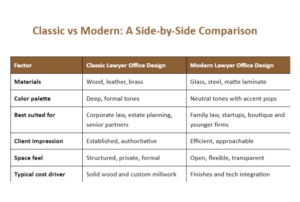
One question we hear from almost every advocate is whether to go fully modern or stay traditional. We covered this trade-off in more detail in our earlier piece, Classic vs Modern Lawyer Office Design: Which Style Suits Your Practice, but the short version is this: modern law office interior design doesn’t have to abandon the gravitas that older, wood-heavy offices convey.
The most effective advocate offices borrow from both. Rich wood tones and leather in the consultation room signal permanence, paired with cleaner lines and decluttered surfaces in reception so the space doesn’t feel dated. A senior litigator handling corporate disputes may lean more traditional, while a younger family law practice can lean further into a modern, approachable aesthetic without losing credibility.
The mistake is treating this as an either-or decision. It’s a dial, not a switch, and where you set it should depend on your practice area and your typical client profile.
Materials, Colors and Lighting That Signal Credibility
A handful of material choices consistently read as trustworthy across advocate office interior design projects:
- Warm wood tones for desks, panelling, or shelving, which convey stability and longevity better than laminate or high-gloss finishes.
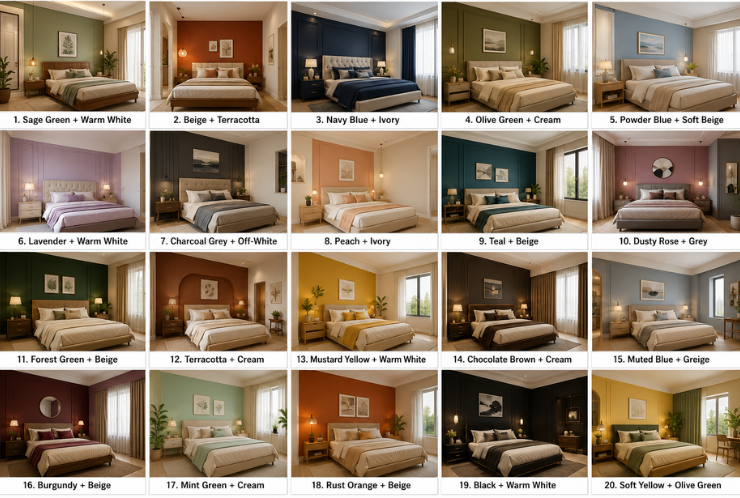
- Deep blues, charcoal greys, and muted greens for accent walls or upholstery. These tones read as calm and serious, unlike bright or saturated colors that can feel unserious in a legal setting.
- Layered lighting instead of a single overhead source. A mix of ambient, task, and accent lighting makes a room feel considered rather than institutional.
- Textiles like wool or heavy linen on seating, which read as higher quality without tipping into showy.
These aren’t arbitrary preferences. They show up again and again in professional-services design because clients associate them, often without realising it, with competence.
Confidentiality-First Layout: The Backbone of Lawyer Office Interior Design
Confidentiality isn’t only a legal obligation in advocate offices, it’s a design requirement, and it should shape the floor plan before furniture or finishes even enter the conversation.
A few layout principles worth following:
- Separate the client circulation path from the internal staff path wherever the floor plate allows, so clients aren’t walking past open desks with active case files.
- Position consultation rooms away from shared walls with the waiting area, or add acoustic insulation where that’s not possible.
- Keep sensitive documents out of any space clients pass through, including printer and filing areas.
- Use frosted or textured glass instead of clear glass for partitions near a consultation room, so privacy is visual as well as acoustic.
A well-planned advocate office design makes confidentiality visible without ever having to say a word about it, and that visibility becomes part of what earns a client’s trust.
Common Mistakes That Undermine Client Trust
A few patterns show up repeatedly in offices that aren’t working as hard as they should:
- Overcrowded reception areas with too much furniture or too many framed certificates, which reads as cluttered rather than accomplished.
- Consultation rooms doubling as storage, with box files stacked in view, which undercuts the sense of organisation clients are looking for.
- Harsh, cold lighting throughout, which makes even a well-furnished space feel unwelcoming.
- Treating a closed door as enough for confidentiality, when sound often travels through walls, ducts, and gaps beneath doors.
Fixing these rarely requires a full renovation, just editing what’s already there and being deliberate about the handful of elements clients notice first.
Building an Office That Earns Trust Before You Say a Word
Every advocate office interior design decision, from the reception chairs to the consultation table, is either building client confidence or quietly working against it. Getting this right isn’t about spending more, it’s about being deliberate with the handful of elements clients actually notice: privacy, warmth, and a sense that their problem will be handled carefully.
If you’re planning a new office or reworking an existing one, Espace N Design works with advocates and law practices across Kolkata to translate these principles into a layout that fits your practice area, your client profile, and your budget.
FAQs
1. What is the most important element of advocate office interior design?
Confidentiality-focused layout and soundproofed consultation rooms matter most, since legal clients are sharing sensitive information and need to feel physically, not just emotionally, secure while doing it.
2. Should a lawyer’s office look traditional or modern?
Neither extreme is required. The strongest lawyer office interior design blends traditional materials like wood and leather with modern lighting and decluttered layouts, adjusted to match the practice area and client base.
3. What colors work best for an advocate office?
Deep blues, charcoal, warm wood tones, and muted greens consistently read as calm and trustworthy, and they tend to age better than trend-driven bright colors.
4. How much does advocate office interior design typically cost?
Costs vary widely depending on office size, city, and material quality, ranging from a focused refresh of client-facing areas to a full architectural overhaul. Getting a scoped estimate from a design team that has actually worked with legal practices is the most reliable way to budget accurately.
5. Does office design really affect whether clients return or refer others?
Yes, in an indirect but measurable way. Clients associate a well-organised, professional space with competence and discretion, and that perception shapes whether they come back or send referrals, even when it isn’t something they consciously evaluate.