Classic lawyer office design relies on wood paneling, leather seating, and rich, formal color palettes to project authority and heritage, while modern lawyer office design favors clean lines, glass partitions, and neutral palettes to project efficiency and approachability. The best fit for your practice usually comes down to three things: your practice area, your client base, and the impression you want a visitor to form in the first few seconds of walking through your door.
Choosing between these two directions is one of the first real decisions in any advocate office design project, and it shapes almost everything that follows, from furniture and lighting to layout and how your reception area greets a first-time client. This guide breaks down both styles, compares them directly, and gives you a practical way to decide which one fits your practice.
What Is Classic Lawyer Office Design?
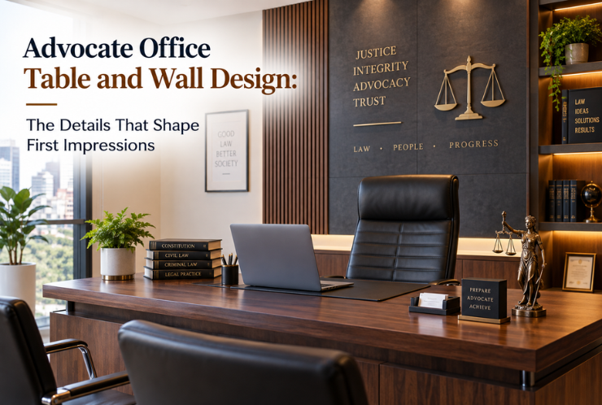
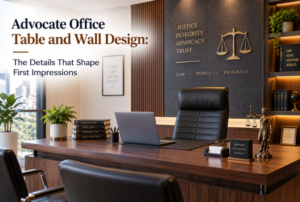
Classic lawyer office design draws from traditional law firm interiors built around mahogany or walnut desks, leather armchairs, built-in bookcases, and a restrained, formal color scheme of deep browns, navy, and forest green. The goal isn’t to follow a trend. It’s to communicate experience, stability, and gravitas the moment someone steps inside.
Elements you’ll typically find in this style include:
- Solid wood furniture with visible grain and craftsmanship
- Leather or leather-look upholstery in seating areas
- Brass or antique-brass fixtures and hardware
- Bookcases or display shelving for legal volumes, files, and awards
- Symmetrical layouts with a formal, structured feel
This direction tends to suit senior partners, corporate law practices, and firms where clients associate age and tradition with reliability. Estate planning, tax law, and high-stakes litigation are good examples of practice areas where a client wants to feel they’re in experienced hands before the meeting even starts.
What Is Modern Lawyer Office Design?
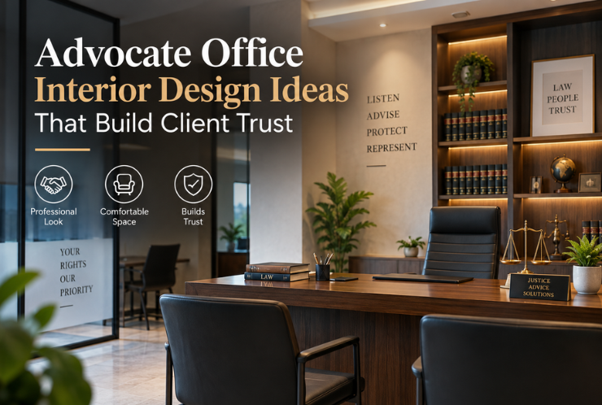
Modern lawyer office design strips the space back to clean lines, neutral tones, glass, and functional furniture. Instead of signaling tradition, it signals transparency and a firm that keeps pace with how legal work actually gets done today.
Common elements include:
- Glass-walled meeting rooms and partitions
- Minimalist desks and ergonomic seating
- Neutral palettes such as white, grey, and muted wood tones, with occasional accent color
- Integrated technology, including video conferencing setups, smart lighting, and wireless charging
- Open or semi-open layouts that encourage collaboration between associates
This direction works well for younger firms, boutique practices, family law and mediation-focused advocates, and any lawyer office interior design brief where the client wants the space to feel current rather than institutional.
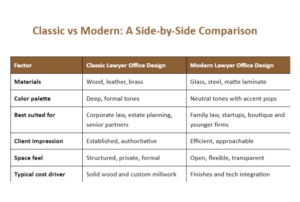
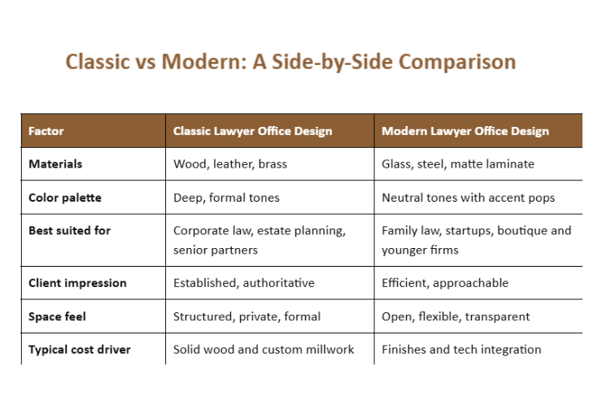
Classic vs Modern: A Side-by-Side Comparison
| Factor | Classic Lawyer Office Design | Modern Lawyer Office Design |
| Materials | Wood, leather, brass | Glass, steel, matte laminate |
| Color palette | Deep, formal tones | Neutral tones with accent pops |
| Best suited for | Corporate law, estate planning, senior partners | Family law, startups, boutique and younger firms |
| Client impression | Established, authoritative | Efficient, approachable |
| Space feel | Structured, private, formal | Open, flexible, transparent |
| Typical cost driver | Solid wood and custom millwork | Finishes and tech integration |
Which Style Suits Your Practice?
There’s no single right answer here, but a few questions usually point you in one direction.
If most of your clients are corporates, or you handle high-value matters like mergers, tax disputes, or estate planning, classic lawyer office design tends to build the kind of trust those clients expect before they hand over sensitive matters. If your practice leans toward family law, startups, intellectual property, or anything where clients want to feel comfortable rather than intimidated, modern lawyer office design usually reads as more welcoming.
Team size matters too. Solo practitioners and small boutique firms often get more value from modern layouts, since they need flexible space that can double as a meeting room, workstation, and client area. Larger, multi-partner firms have more room to commit part of the office to a formal classic reception while keeping associate work areas modern and efficient, an approach covered in more detail below.
Why Advocate Office Design Affects Client Trust and Business Outcomes
Office design isn’t just decoration. It measurably affects how people perceive the business operating inside it. Gensler’s 2025 Global Workplace Survey, based on responses from more than 16,000 office workers across 15 countries, found that employees in well-designed, flexible workplaces are nearly three times more likely to consider their office “a great place to work,” with a direct link between design quality and reported productivity.
Source: Gensler, Global Workplace Survey 2025
For a law practice specifically, that translates into client experience just as much as employee experience. A cramped, dated reception area or a meeting room that feels closed off can undercut a strong legal argument before a client has said a word. Legal industry publications, including the ABA Journal, have documented a broader shift among law firms toward hospitality-inspired, transparency-focused interiors as firms compete for both clients and talent.
Source: ABA Journal — Designing your law office to save money and boost productivity
Lawyer Office Interior Design Tips That Work for Either Style
Regardless of which direction you choose, a few fundamentals apply to nearly every lawyer office interior design project:
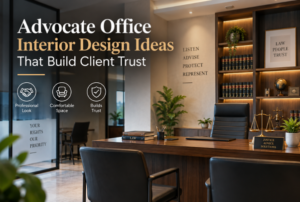
- Keep the reception area uncluttered. It’s the first thing every client sees, and it sets the tone before you’ve even greeted them.
- Separate consultation spaces from working areas so confidential conversations stay confidential.
- Invest in proper task lighting for reading and document review, not just ambient lighting.
- Plan for technology from the start, including video conferencing, secure Wi-Fi, and charging points, rather than retrofitting it later.
- Carry your firm’s branding through the space consistently, in colors, signage, and logo placement, so it feels cohesive rather than generic.
Blending Both: Transitional Advocate Office Design
A growing number of firms don’t choose one style outright. Transitional advocate office design borrows the warmth and material quality of classic interiors, think wood tones and leather accents, while adopting the open layouts and lighter palettes of modern design. It’s a practical middle ground for firms that want to feel established without feeling dated, and it’s increasingly what advocates ask for when they want an office that will still look right in ten years, not just this year.
Final Thought
The right advocate office design isn’t about picking whichever style looks best in a portfolio. It’s about matching the space to the clients you serve and the practice you’re building. Whether that means a classic, modern, or transitional direction, getting the details right in the lawyer office interior design process pays off in how clients experience your practice from the moment they wal
FAQs
1. Is classic or modern office design better for a law firm?
Neither is universally better. Classic lawyer office design tends to suit corporate, tax, and estate law practices where clients expect formality, while modern lawyer office design suits family law, boutique, and younger firms where approachability matters more.
2. What colors work best for advocate office design?
Deep browns, navy, and forest green suit classic designs, while white, grey, and muted wood tones with a single accent color work well for modern spaces. Both approaches should avoid overly bright or distracting colors in client-facing areas.
3. How much does advocate office interior design cost?
Costs vary based on the size of the space, materials chosen, and how much custom furniture or millwork is involved. Classic designs with solid wood and brass fittings generally cost more than streamlined modern layouts, so it’s worth getting a project-specific estimate rather than relying on a flat figure.
4. Can classic and modern elements be combined in one office?
Yes. Transitional advocate office design is increasingly common, pairing warm materials like wood and leather with open, modern layouts, giving firms a space that feels established without looking outdated.